
Fun Facts - Orchard Orioles
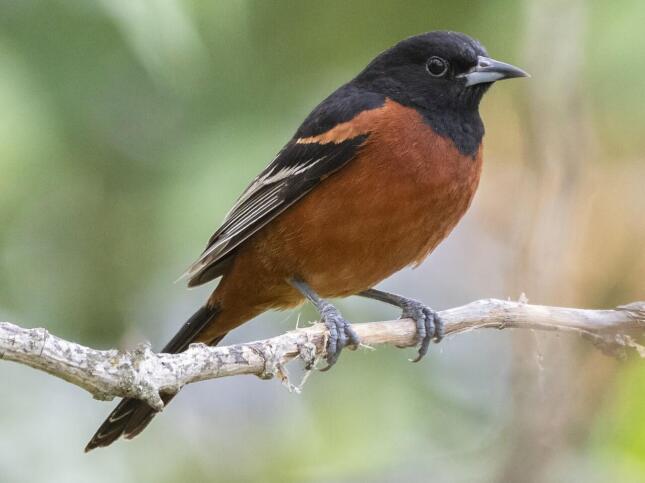
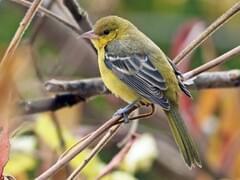
- The Orchard Oriole swaps the typical flame-orange of other orioles for a deep, burnished russet. Hopping among riverine shrubs or scattered trees, male Orchard Orioles sing a whistled, chattering song to attract yellow-green females. The smallest of North America’s orioles.\\
- Orchard Orioles don’t visit seed feeders, but they may drink nectar from hummingbird feeders or visit slices of oranges or offerings of fruit jelly.
- Look for Orchard Orioles in open woodlands along river edges, as well as along marsh edges, lakeshores, open shrublands, and farms. In open habitats they nest in scattered trees, including large trees planted for shade
- Orchard Orioles eat mostly insects and other arthropods, along with some fruit and nectar. They glean prey from the foliage. They drink nectar from flowers (and hummingbird feeders). Sometimes they dip their head into the flower opening, picking up pollen along the way. Their diet shifts to mostly fruit just before fall migration. Migrating flocks forage on ripe mulberries, chokecherries, and other berries..
- Orchard Orioles build nests in a variety of tree species, including maple, ash, cottonwood, willow, elm, white pine, Norway spruce, oak, magnolia, and pecan. The nests are usually attached to forked twigs or branches away from the main trunk, at varying heights from the ground The female does most of the nest building, completing the project in about 6 days. Suspended from a forked twig, the nest is woven from long blades of green grass that turn yellow as they dry, and usually lined with fine grasses, plant down, catkins, cotton, animal wool, bits of yarn, and feathers. It measures about 4 inches across and 3 inches deep on the outside, with an inner cup measuring 2.5 inches across and 2 inches deep. The eggs are usually visible through the loosely woven nest bottom.
- Orchard Orioles migrate north late in the spring and head southward early, with some returning to their wintering grounds as early as mid-July. Because of the short breeding season, researchers have trouble distinguishing between breeding orioles and migrating ones in any given location.
- The oldest Orchard Oriole on record was a male and he was at least 11 years old when he was recaptured and rereleased during banding operations in Maryland in 2012.