
Fun Facts About Red Bellied Woodpeckers
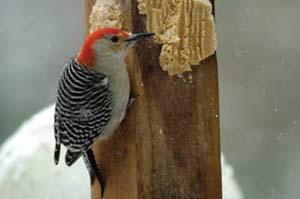
- Red-bellied Woodpeckers are pale, medium-sized woodpeckers common in forests of the East. Their strikingly barred backs and gleaming red caps make them an unforgettable sight – just resist the temptation to call them Red-headed Woodpeckers, a somewhat rarer species that's mostly black on the back with big white wing patches. Learn the Red-bellied's rolling call and you’ll notice these birds everywhere.
- Red-bellied Woodpeckers bring bright colors and entertaining action to bird feeders. If you live near any wooded patches, you may be able to attract them using feeders filled with suet (in winter), peanuts, and sometimes sunflower seeds. They’ve even been spotted drinking nectar from hummingbird feeders. Dead trees may encourage the birds to forage naturally or even nest in your yard, and they may feed on berry trees such as hawthorn or mountain-ash in fall or winter.
- Though this bird mainly eats insects, spiders, and other arthropods, it eats plenty of plant material, too. In particular, acorns, nuts, and pine cones, as well as seeds extracted from annual and perennial plants and (particularly in fall and winter) fruits ranging from grapes and hackberries to oranges and mangoes. Occasionally eats lizards, nestling birds, even minnows
- A Red-bellied Woodpecker can stick out its tongue nearly 2 inches past the end of its beak. The tip is barbed and the bird’s spit is sticky, making it easier to snatch prey from deep crevices. Males have longer, wider-tipped tongues than females, possibly allowing a breeding pair to forage in slightly different places on their territory and maximize their use of available food.
- These birds often stick to main branches and trunks of trees, where they hitch in classic woodpecker fashion, leaning away from the trunk and onto their stiff tail feathers as they search for food hiding in bark crevices. When nesting, males choose the site and begin to excavate, then try to attract a female by calling and tapping softly on the wood around or in the cavity. When a female accepts, she taps along with the male, then helps put the finishing touches on the nest cavity. At feeders, Red-bellied Woodpeckers will push aside most bird species other than Blue Jays.